What is the ideal level of self-sufficiency for an emergency shelter?
The issue of self-sufficiency is paramount in determining the needs for refuges chambers. Beyond the number of people to be sheltered, it is in fact the determination of how long they will need to remain inside, until emergency responders arrive or the incident ends, that influences the shelter’s design. This duration must be assessed as part of the project’s risk assessment.
Risk assessment is conducted based on several criteria, such as the site layout, the type of work being performed, the number of people underground, the number and type of motorized vehicles operating underground, the fire risk, and evacuation procedures.
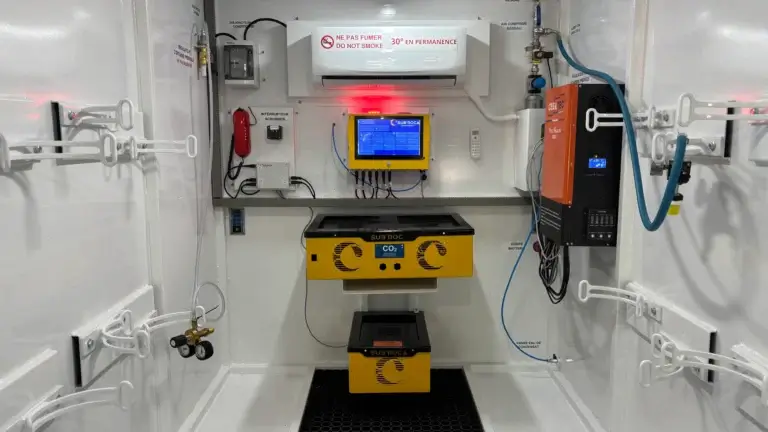
A refuge is considered to be in self-sufficient mode when it is cut off from external resources such as air and electricity. The refuge then operates autonomously using backup batteries, a supply of breathable air, or an air filtration system.
Other life-sustaining resources, such as water and food, must also be stockpiled in sufficient quantities to last for the duration of the refuge’s self-sufficiency.
The self-sufficiency period of a refuge is generally between 24 and 36 hours.
One of the global benchmarks is the set of recommendations from the Government of Western Australia, Department of Mines and Petroleum, titled “Refuge Chambers in Underground Mines.” This document recommends a minimum self-sufficiency period of 36 hours based on a worst-case scenario.
Underground Refuge Solutions
Feedback from incidents around the world suggests that most refuge chambers are used for less than 10 hours. However, no two mining incidents are alike, making it impossible to standardize the required self-sufficiency duration.
Below is a list of different types of mines with their recommended self-sufficiency durations.|
Environments |
Hazards |
Recommended Minimum Self-Sufficiency Periods |
Country |
References |
||||||||||||||||
|---|---|---|---|---|---|---|---|---|---|---|---|---|---|---|---|---|---|---|---|---|
|
Underground Mines |
|
|
|
|
||||||||||||||||
|
Tunnels |
|
24 hours |
International |
International Tunnelling and Underground Space Association – Working Group n°5 Health and Safety in Works, 2014, Guidelines for the Provision of Refuge Chambers in Tunnels Under Construction |
Underground Mines
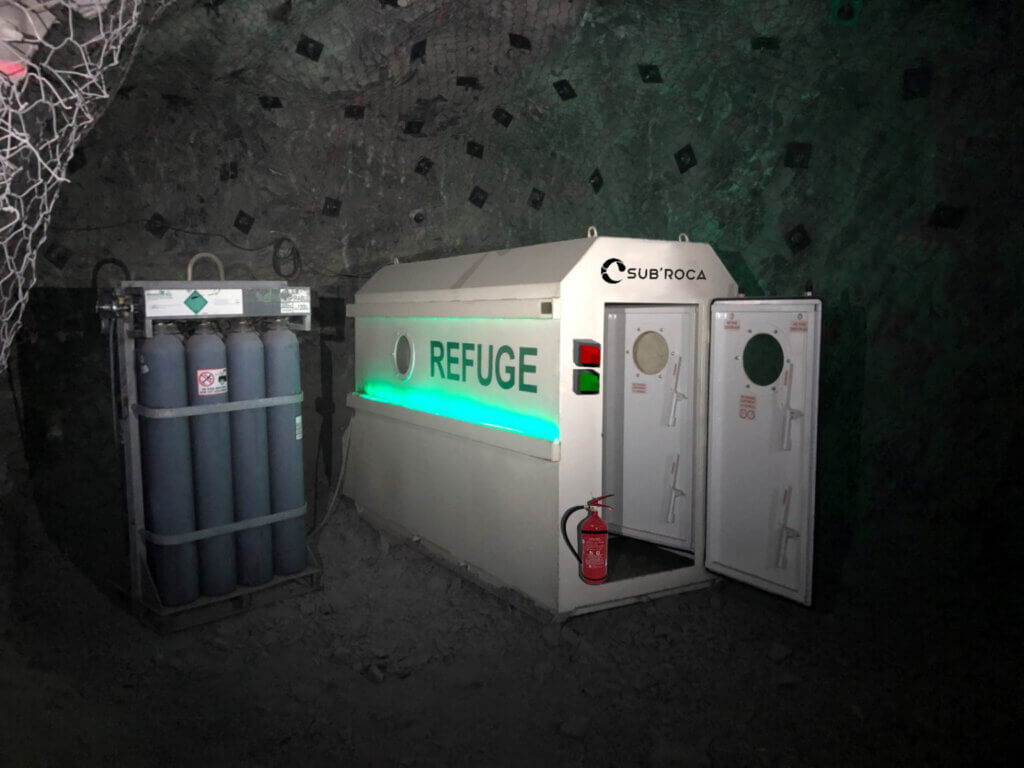
The ideal duration for an emergency and rescue shelter in underground mines can range from 8 to 48 hours. In this environment, the most common hazards are fires, rockfalls, and the spread of hazardous gases or fumes; it is in these situations that emergency and rescue shelters play a vital role.
Regarding safety standards in underground mining operations, many countries use Western Australia’s DMP standards as a benchmark for emergency and rescue shelters. These standards are based on the worst-case scenario; therefore, the ideal duration of a shelter has been set at 36 hours.
Although longer incidents and extreme cases are less common, they still occur frequently.
Based on the diverse range of incidents that have already occurred in underground mines around the world, a single benchmark for a refuge’s autonomy cannot be clearly defined as the ideal duration. Nevertheless, the ideal autonomy for a refuge has been suggested to range from 2 to 10 hours; although extreme cases are less frequent, they can occur at any time.
Tunnel Excavation
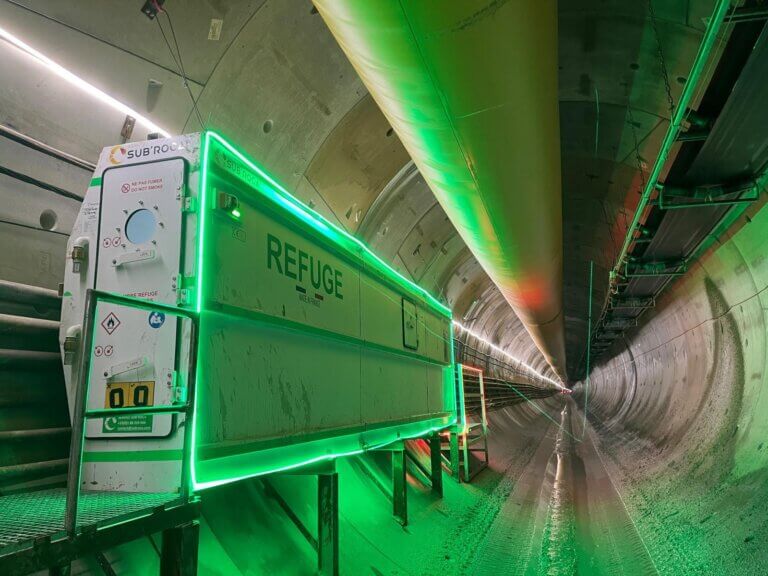
The operational duration of an emergency and rescue shelter for tunnel projects can range from 24 to 72 hours. The risks that may necessitate the use of a shelter in the tunnel excavation and underground construction industries include the following:
Internationally, the International Tunnelling and Underground Space Association (ITA) is the leading industry organization that represents the industry and sets health and safety standards for it. The need for emergency shelters and rescue facilities must be assessed as part of the risk assessment for a tunneling project. As with the mining industry, the duration of an emergency refuge for tunneling is assessed based on the time required to carry out a rescue. The agency recommends a minimum of 24 hours, with the option to provide additional resources to extend this period if the risk assessment requires it.
Frequently Asked Questions
It is an airtight shelter, also known as an emergency and rescue chamber, that provides breathable air to a specific number of people for a defined period of time, while they wait for the disaster to end or for rescue teams to arrive.
Because an underground worksite (tunnel, mine, adit) generally does not have multiple access routes to the surface. In the event of a rockfall or fire, a complete evacuation is often impossible, making on-site shelter essential.
The two most common scenarios are a rockfall, which blocks access to the surface, and a fire, which prevents evacuation and releases toxic fumes.
Tunnels (excavated using tunnel boring machines, such as the Grand Paris Express infrastructure), underground mines and quarries, as well as underground public works construction sites.
Yes, the Compact line was specifically designed to fit into narrow tunnels and veins while remaining easily movable.
Table of contents
related product
Shelt'air emergency refuge chambers
https://subroca.com/underground-safety-equipment/sheltair-emergency-refuge-chambers/